
While Nifty 50 reflects changes in 40 years, it also shows what is missing: Low-cost manufacturers at one end, and deep-value players at the other. Also missing are technology players, observes T N Ninan.

Centre mulls strategy to ensure powers given to the agencies are not misused.

'However, we have seen weakness in our active pharmaceutical ingredients business.'

'If private capex has to kick in, there should at least be 2-3 years of visibility.'

The headline for corporate profit growth has been very encouraging in the July-September quarter (Q2) of 2023-24 (FY24), with the combined net profit of listed companies up by 38 per cent year-on-year. However, the earnings distribution has been very lopsided, with most of the growth coming from public-sector oil-marketing companies (OMCs), banks, non-bank lenders, automobile (auto) companies, and cement producers. By comparison, companies from information technology services, fast-moving consumer goods (FMCG), retail, and consumer durables were disappointed, experiencing a sharp slowdown in net sales growth and a relatively muted increase in reported net profit.

While the domestic industry needs to increase its R&D spending quite dramatically, price controls will only cripple the sector.

Demoralising the private companies and disregarding their contribution won't do any good to the country or its youth as our experience has shown that private enterprises in mobile manufacturing has lead to every poor family owning a mobile phone now, while the country's private sector in the pharmaceutical space has been serving humanity through vaccines and medicines during Covid times, Modi said.

With intermittent disruptions in the supply chain of raw materials from China, the Indian pharma industry has braced itself with bigger inventory. Even smaller drug makers are now carrying a month of buffer stock of key raw materials, said industry insiders. The lockdown in various Chinese provinces, including Shanghai, is likely to delay shipments by two weeks to a month, said domestic players. Shipments are critical for the Indian drug industry, which imports 70 per cent of its raw material from China.

Finance Minister Nirmala Sitharaman is likely to strike a fine balance between being fiscally prudent and growth supportive when she presents her fourth straight budget on Tuesday, which is expected to have plans to boost spending to revive investment and create jobs. The Budget for the fiscal year starting April 1, 2022 is likely to raise spending on infrastructure to set the economy on a firmer footing. The stage for the Budget presentation was set by the Economic Survey stating that the government has the fiscal space to do more to support the economy that is forecast to grow at a healthy 8-8.5 per cent growth in the 2022-23 fiscal.

'As the Indian economy continues to expand over the next three years, mid- and small-caps should do well as they have higher exposure to the domestic economy than large-caps.'

Maharashtra Chief Minister Uddhav Thackeray announced a statewide curfew for 15 days from 8 am on April 14 to contain the rapid spread of the coronavirus in its second wave. With Section 144 being imposed across the state, Thackeray essential services have been exempted from the restrictions. The curfew will be in place till 7 am on May 1.

After the hit of the pandemic, India Inc is now worried about the adverse impact of inflation and higher commodity prices on their revenues and margins. The inflation scare is the strongest among manufacturers of consumer goods such as automobiles, consumer durables, and fast-moving capital goods (FMCG). Companies across sectors fear they will not be able to pass on the hike in input costs to their consumers due to weak demand, which, in turn, would lead to a hit on margins and profitability in the forthcoming quarters.

IT and IT-enabled services will be allowed to operate with essential minimum staff only while the rest would work from home.

The third-quarter financials didn't excite market watchers. But equity investors can still make money if they invest in the right stocks.

As its factories resumed operations after over two-month of grim battle against coronavirus, China is busy tapping into the vast business opportunities of export of key medical goods, specially ventilators and personal protection equipment (PPE), across the world, including India, where both private and government bodies are placing orders for the import of these products.

'The focus for value creation will be on all business segments.'

There is no direct impact of the Russia-Ukraine crisis on India in terms of bilateral trade but a surge in oil prices poses considerable risk to the economy, an analyst report said on Friday. International oil prices which have surged past $100 per barrel "pose risks to external stability and currency movement," a Bank of Baroda Economics Research report said. Russia has launched military operations against Ukraine, stoking fears of significant disruption in the region, including loss of life. The West is ramping up financial sanctions against Russia and support for Ukraine.

The US space agency also warned that the risk of debris colliding with the International Space Station has risen by 44 per cent since Mission Shakti.

Opening up India's market to neighbouring countries can be as strategic as access denial to others. The game should be played both ways, even if it upsets domestic business lobbies, observes T N Ninan.

Great improvements in education and healthcare are the need of the hour.

There is no one way to describe the 12 months that have gone by since India reported its first Covid-positive case on January 30, 2020.
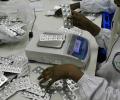
There are just 1,500 drug inspectors responsible for more than 10,000 factories in India

Sun Pharmaceutical, which is growing its dermatology and ophthalmic specialty business in the US will spend $460 million on R&D.

In a surprise announcement in April, Sun and Ranbaxy -- at that time owned by Japan's Daiichi -- declared an all-stock deal to create India's largest and world's fifth-largest drugmaker in an over $4 billion deal.

These five stocks, which have lagged the markets over the last two years, have doubled in value since March 23.

'When there is unlocking, there is demand revival.' 'This is going to be the main growth engine in this kind of an economic scenario.'

Sahil Vachani fuels Analjit Singh's new business initiatives

Analysts say those taking exposure through stocks could look at firms focused on domestic business

After a detailed scrutiny, fair trade watchdog CCI has suggested Sun Pharma and Ranbaxy to make certain changes in their proposed $4 billion merger deal, including possible divestment of some brands, to address anti-competitive concerns.

President Kovind, who arrived in Dhaka earlier in the day on his maiden State visit at the invitation of his counterpart M Abdul Hamid to attend the golden jubilee celebrations of Bangladesh's independence from Pakistan in 1971, held delegation-level talks with him which was followed by a banquet.

India has the third highest number of billionaires in the world after the US and China, according to a new list by the prestigious Forbes magazine, which said Reliance Industries chairman Mukesh Ambani reclaimed his spot as Asia's richest person, dethroning Chinese business tycoon Jack Ma who was the richest person in the region a year ago.

'The financial sector's performance in the first two quarters was a revelation.' 'It clearly showed the clean-up had been done in the past one-and-a-half years and that capital brought in was significantly stronger.'

Netmeds is looking at using new technologies such as deep learning and data analytics to improve forecasting in terms of the demand of the products for pharma companies, reports Peerzada Abrar.

The government on Saturday made its prior approval mandatory for foreign investments from countries that share land border with India to curb 'opportunistic takeovers' of domestic firms following the COVID-19 pandemic, a move which will restrict Foreign Direct Investment from China.

While salary growth may range from a marginally positive to stagnant or even negative, the increment for some of the "super-specialised" profiles can go beyond 15%.

Low growth visibility and trouble with regulators have resulted in lack of interest from investors
Dilip Shanghvi founded Sun Pharma in 1983.

Each of the larger states may need less than Rs 10,000 crore each to finance the exercise.

The 30-share Sensex ended 50 points lower at 28,112 and the 50-share Nifty declined 12 points to close at 8,531.

Currently, Himalaya sells 250 products across the globe.
